Iontophoresis for Hyperhidrosis
Iontophoresis is a non-invasive treatment used to reduce excessive sweating in people with hyperhidrosis. It is most commonly used to treat sweating of the hands and feet and has been used safely for many decades. It is also used for hyperhidrosis of the underarms.
The treatment works by delivering a mild electrical current through water to temporarily block sweat glands. When used consistently, iontophoresis can significantly reduce sweating for many individuals. The United States FDA regulates the iontophoresis device as a "medical device" and is subject to a 510(k) and FDA clearance.
For people with palmar hyperhidrosis (sweaty hands), plantar hyperhidrosis (sweaty feet), or axillary hyperhidrosis (sweaty underarms), iontophoresis is often one of the first non-medication treatment options recommended.
This page specifically addresses the use of iontophoresis to treat excessive sweating, but there are other treatment options available such as prescription antiperspirants and glycopyrrolate tablets. Iontophoresis can be used in combination with these other products, which can prove particularly effective for patients with severe hyperhidrosis.
- Iontophoresis is a non-invasive treatment that uses a mild electrical current delivered through water to reduce excessive sweating.
- It is most commonly used for sweaty hands (palmar hyperhidrosis) and sweaty feet (plantar hyperhidrosis).
- Many people experience significant improvement after several weeks of regular treatments.
- Maintenance sessions are typically required to keep sweating under control.
- Iontophoresis is generally safe, with mild temporary side effects such as skin irritation or dryness.
- FDA-cleared devices for home use are available, allowing treatments to be performed at home without a doctor visit.
-

What Is Iontophoresis?
Iontophoresis is a medical treatment that uses a small electrical current delivered through water to reduce sweat production in specific areas of the body.
During treatment, the hands or feet are placed in shallow trays of water. When treating underarms, the underarm pad is soaked in water and placed in the underarm area. A specialized device then passes a gentle electrical current through the water and skin. This current temporarily blocks the sweat ducts, which reduces sweat production.
Although the exact biological mechanism is not completely understood, clinical studies have shown that iontophoresis can significantly decrease sweating when used regularly.

-

How Iontophoresis Works
During an iontophoresis session, the affected body area (hands or feet) is submerged in water while a mild electrical current is delivered through the water.
The treatment typically follows these steps:
- The hands or feet are placed in trays filled with tap water.
- Electrodes in the device generate a mild electrical current.
- The current passes through the skin for a controlled period of time.
- Sweat glands become temporarily blocked, which reduces sweat production.
Most treatment sessions last 15 to 30 minutes.
While the sensation varies between individuals, treatment sessions should never be painful. Most people describe the sensation as "mild tingling" or warmth rather than pain.

What Areas of the Body Can Be Treated?
Iontophoresis is FDA-cleared to treat hyperhidrosis in 3 areas:
-
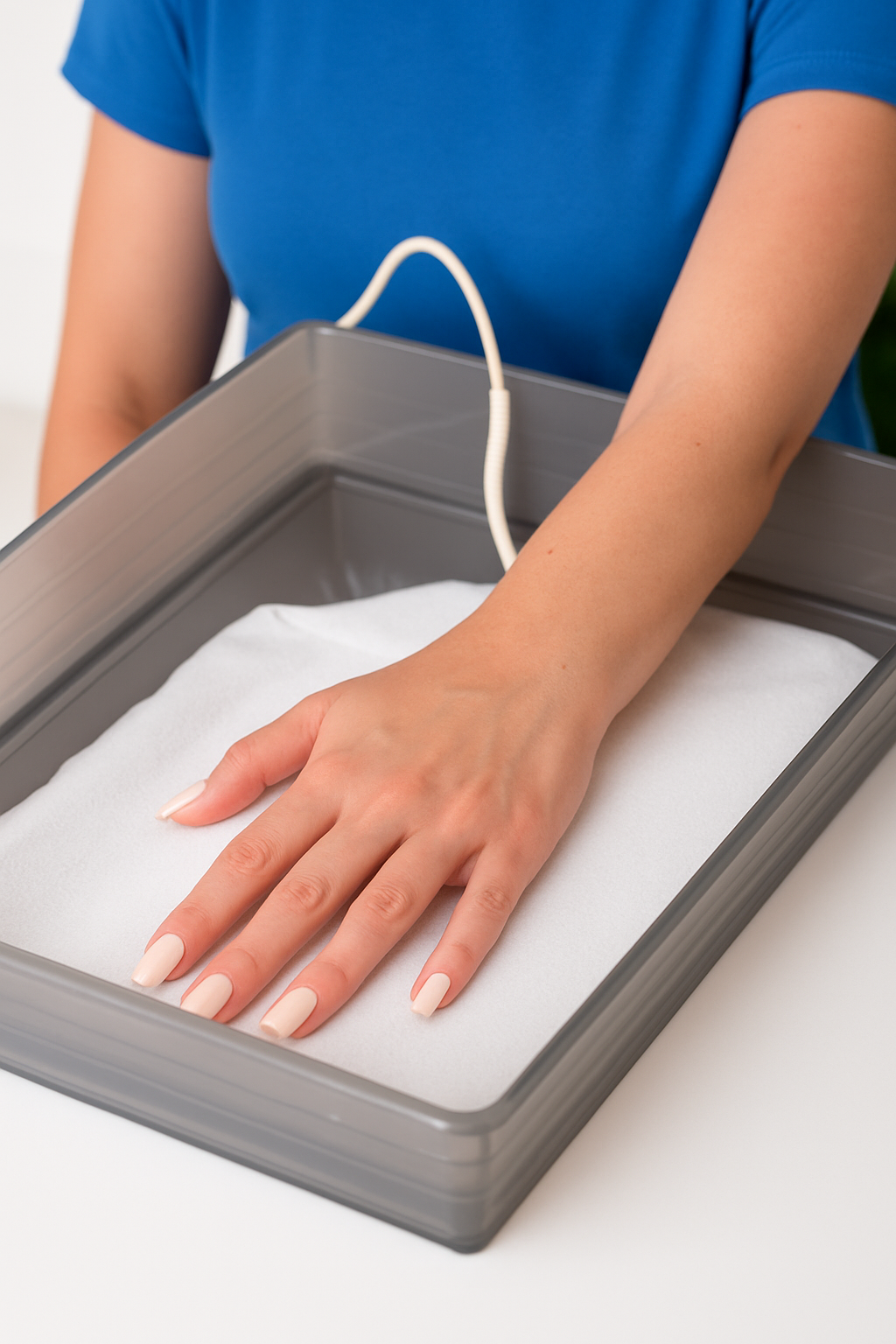
Iontophoresis for Sweaty Hands (Palmar Hyperhidrosis)
Sweaty hands are among the hardest areas to treat and have a significant effect on quality of life. Iontophoresis is a very effective treatment for palmar hyperhidrosis.
-

Iontophoresis for Sweaty Feet (Plantar Hyperhidrosis)
Plantar hyperhidrosis is often exacerbated by daily living. An FDA-cleared iontophoresis device treats sweaty feet without the use of topical creams or oral medications.
-

Iontophoresis for Sweaty Underarms (Axillary Hyperhidrosis)
Not all iontophoresis devices come with an attachment for axillary hyperhidrosis, but iontophoresis for underarm sweating is very effective when done correctly.


-

How Effective is Iontophoresis?
Iontophoresis has been shown in multiple studies to reduce sweating in people palmar, plantar, and axillary hyperhidrosis.
Research suggests that many patients experience significant reductions in sweating, especially when treatments are used consistently.
Reported improvement rates in clinical studies often range from 70% to 90% reduction in sweating for individuals who follow recommended treatment schedules; however, results can vary depending on the individual and the severity of the condition.
Maintenance treatments are typically required to sustain results over time.

How Often Do You Need Iontophoresis Treatments?
Iontophoresis treatment usually occurs in two phases: (1) initial treatment; and (2) maintenance.
0
x
Initial Treatment Phase
Up to 5 sessions (3-5 recommended) per week until sweating improves.
0
x
Maintenance Phase
After initial phase, 1 session per week to maintain sweat reduction
0
%
Reduction in sweat from iontophoresis is up to 90% based on clinical trial data
-

Side Effects of Iontophoresis
Iontophoresis is generally considered safe and well tolerated when used appropriately.
Common side effects may include:
- Mild skin irritation
- Dry skin
- Redness or temporary discomfort
These side effects are typically mild and resolve shortly after treatment.
Applying moisturizer after treatment may help reduce dryness.
Serious complications are rare when iontophoresis devices are used according to manufacturer instructions.

-

Who Is a Good Candidate for Iontophoresis?
Iontophoresis may be a good option for individuals who:
- Have palmar hyperhidrosis (excessive sweating of the hands), plantar hyperhidrosis (excessive sweating of the feet), and/or axillary hyperhidrosis (excessive sweating of the underarms)
- Have not responded well to prescription-strength antiperspirants or glycopyrrolate tablets
- Prefer a treatment that does not involve medications
Iontophoresis may not be appropriate for people who have:
- Pacemakers
- Certain implanted metal devices
- Significant cardiac conditions
- Pregnancy (in some cases)
A healthcare professional can help determine whether iontophoresis is an appropriate treatment option.

Iontophoresis vs Other Hyperhidrosis Treatments
Several treatment options exist for managing hyperhidrosis. The most appropriate treatment depends on the severity and location of sweating.
Common treatments may include:
-

Glycopyrrolate Tablets
Oral medication used to treat hyperhidrosis. Effective in 90% in patients, but some patients discontinue due to dry mouth.
-

Prescription-Strength Antiperspirants
Antiperspirants are first-line treatment for managing hyperhidrosis, but some patients do not like applying topical products.
-

Other Options
Other treatment options all require in-person doctor visits and include botulinum toxin injections, microwave therapy, and surgical procedures


-
Choosing the Best Iontophoresis Device for Hyperhidrosis
Several medical devices are available for performing iontophoresis at home. These devices are designed to deliver a controlled electrical current through water to reduce excessive sweating of the hands and feet.
When selecting an iontophoresis device for hyperhidrosis, important factors to consider may include:
- FDA clearance - only choose a device that is FDA cleared for safety
- The body areas that the device treats (hands, feet, and/or underarms)
- Adjustable current settings for comfort and effectiveness
- Ease of use and treatment setup
- Safety features such as automatic shutoff
- Guidance from a healthcare professional
Because hyperhidrosis severity varies between individuals, the best device is one that can be used consistently and safely according to recommended treatment schedules.
When to See a Doctor for Excessive Sweating
Sweating is a normal body function that helps regulate temperature. However, excessive sweating may indicate hyperhidrosis when it occurs without heat or physical exertion.
People with hyperhidrosis may experience sweating that:
- Occurs frequently without clear triggers
- Interferes with daily activities
- Causes emotional or social distress
- Soaks through clothing or affects grip
If excessive sweating affects your quality of life, a healthcare professional can help evaluate possible causes and recommend appropriate treatments.
Learn More About Hyperhidrosis
Hyperhidrosis can affect different parts of the body and may require different treatment approaches depending on the type and severity.
Check out our comprehensive guide on hyperhidrosis.
Frequently Asked Questions About Iontophoresis for Hyperhidrosis
How Does Iontophoresis Work?
Iontophoresis uses a mild electrical current to push the ions in water into the sweat gland to temporarily block sweat glands to treat excessive sweating (hyperhidrosis).
What Are The Side Effects of Iontophoresis?
Iontophoresis side effects are usually mild and temporary, most commonly including:
- Redness, dryness, or irritation of the skin
- Itchiness
- A tingling sensation (like "pins and needles"
- Minor blisters or burning if the current is too high
What is the success rate of iontophoresis?
Most clinical trials report effectiveness between 80-90% for palmar and plantar hyperhidrosis and 70% for axillary hyperhidrosis. When done correctly, iontophoresis has a high success rate, which is why you should choose a manufacturer who provides good customer service and support.
How Long Does Iontophoresis Treatment Last?
Each session should be 15-30 minutes, though some references support longer use of 20-40 minutes.
The initial treatment phase should be 3-5 times per week until the sweating has reduced. After the initial treatment phase, which is called the maintenance phase, less frequent sessions are required. During the maintenance phase, most patients will do as little as 1 session or less per week.
What Are The Different Types of Iontophoresis?
The iontophoresis process uses two types of voltage supply: (1) direct current; and (2) alternating current.
What Is Iontophoresis Used For?
In hyperhidrosis, iontophoresis is used to treat excessive sweating by using a mild current to drive the ions in water into the sweat glands to cause a temporary blockage of the sweat gland.
Does Iontophoresis Really Work?
Iontophoresis has been found to be effective in 70-90% of patients, depending on the severity and location of the excessive sweating.
Does Iontophoresis Damage Nerves?
No, iontophoresis does not damage nerves.
Is Iontophoresis Painful?
No, when done correctly, iontophoresis should not be painful. Most patients describe it as a "tingling sensation."
Medical References & Sources
-
International Hyperhidrosis Society. Iontophoresis for Excessive Sweating.
Available at: https://www.sweathelp.org/hyperhidrosis-treatments/iontophoresis.html -
Pariser DM, Ballard A. Topical therapies in hyperhidrosis care.
Dermatologic Clinics. 2014;32(4):485-490.
doi:10.1016/j.det.2014.06.001
Available at: https://pubmed.ncbi.nlm.nih.gov/25152341/ -
McAleer MA, Collins P. A study investigating the efficacy of tap water iontophoresis for palmar hyperhidrosis.
Clinical and Experimental Dermatology. 2014;39(3):337-339.
doi:10.1111/ced.12294
Available at: https://pmc.ncbi.nlm.nih.gov/articles/PMC5705354/ -
Glaser DA, Hebert AA, Nast A, et al. Management of primary focal hyperhidrosis: An updated treatment algorithm.
Journal of the American Academy of Dermatology. 2017;76(4):736-745.
doi:10.1016/j.jaad.2016.11.042
Available at: https://www.jaad.org/article/S0190-9622(18)32224-2/pdf -
Solish N, Bertucci V, Dansereau A, et al. A comprehensive approach to the recognition, diagnosis, and severity-based treatment of focal hyperhidrosis.
Dermatologic Surgery. 2007;33(8):908-923.
doi:10.1111/j.1524-4725.2007.33192.x
Available at: https://pubmed.ncbi.nlm.nih.gov/17661933/ -
Hornberger J, Grimes K, Naumann M, et al. Recognition, diagnosis, and treatment of primary focal hyperhidrosis.
Journal of the American Academy of Dermatology. 2004;51(2):274-286.
doi:10.1016/j.jaad.2003.12.029
Available at: https://pubmed.ncbi.nlm.nih.gov/15280848/
This page is for informational and educational purposes only and is not intended to provide medical advice, diagnosis, or treatment. Iontophoresis and other treatments for hyperhidrosis may not be appropriate for everyone. Always consult a qualified healthcare professional regarding any medical condition or before starting a new treatment. If you experience severe symptoms or concerns related to excessive sweating, seek professional medical evaluation.